Please visit the following website for the details on the Darvish Yu Water Foundation:

1.Project Title
Ensuring Sustainable Drinking Water Access through Rainwater Harvesting in Baharul Village, Naogaon District, Bangladesh
2.Project Site
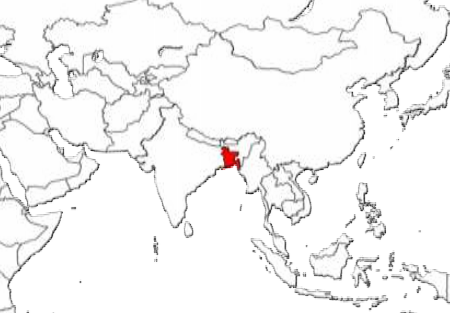
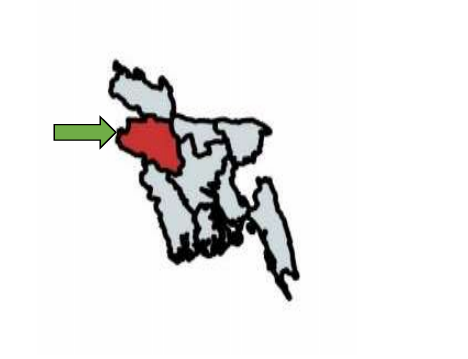
Ward No. 7, Baharul Village, Ganguria Union Parishad (Ward No. 4), Porsha Upazila, Naogaon District, Rajshahi Division, Bangladesh
Location maps
Created with mapchart.net
Conceptual image of site
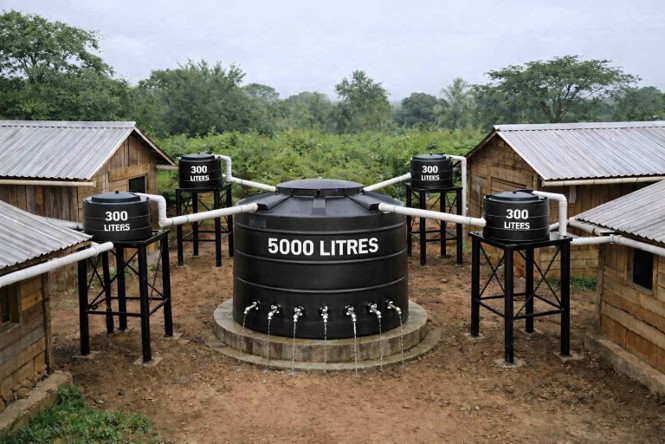
Above is the proposal drawing by ARCO. Rainwater will be collected from tin-roofed catchment points attached to surrounding houses and channeled into 5,000-liter tanks through a network of pipelines. Each tank will be fitted with taps. 5 system installations are planned for this project.
3.Project Period
August 2026 to February 2027
4.Local Partner
The Association for Rural Cooperation (ARCO) is a nonprofit NGO committed to empowering marginalized communities in Bangladesh, with a special focus on Adibashi and Dalit groups. Beginning its work in September 1995 in Joypurhat, Naogaon, Bogura, Natore, and Rajshahi districts, ARCO was formally established in 1996 to build a society free from hunger and poverty.
Website: https://www.arcobangladesh.org/index.html
Facebook: https://www.facebook.com/arco.arco.3110
Address: Boalia-5891,Naogaon, Bangladesh
5.Background and Water Problems at the Target Site
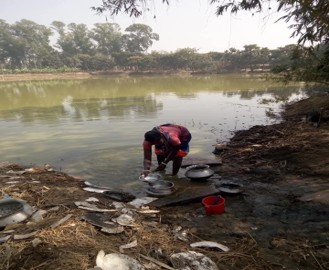
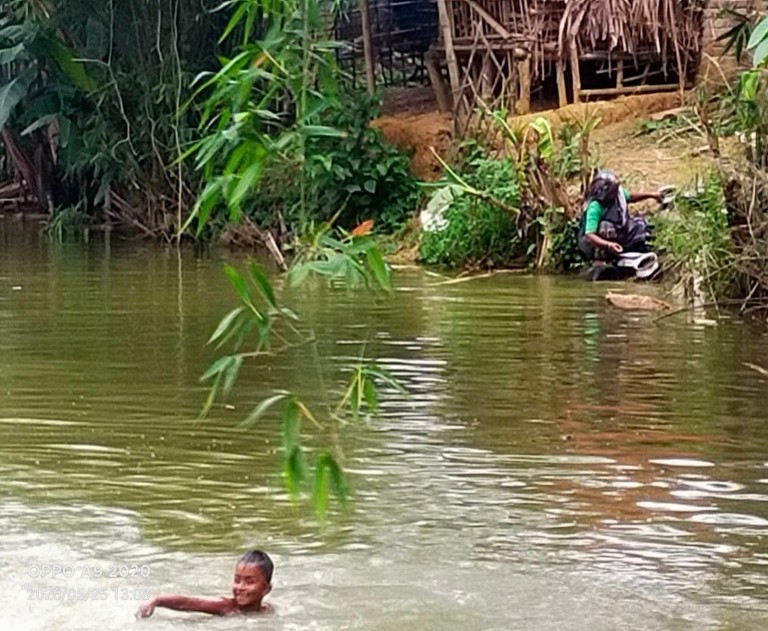
Baharul village, comprised of approximately 150 households with a population of around 800 people, faces an acute water crisis. For all domestic purposes other than drinking, families rely on ponds. Despite attempts to drill as deep as 300 feet, no reliable water source has been found. As a result, the community lacks a sustainable solution for safe drinking water, leaving the village in a state of severe vulnerability.
The installation of rainwater harvesting systems(RWHS) in Baharul Village will significantly improve community resilience against water-related challenges. By reducing dependence on arsenic-contaminated shallow tube wells, households will gain reliable access to safe drinking water, leading to improved public health outcomes and reduced medical costs. Women and children will benefit from reduced time and effort needed for collecting water, enhancing opportunities for education and other activities. In addition to household use, stored rainwater will provide supplementary irrigation during seasonal droughts, supporting crop production and food security. This will strengthen climate resilience in one of Bangladesh’s most drought-prone regions.
6.Project Description
The project seeks to establish a community-based rainwater harvesting system(RWHS). Five RWHS plants, each consisting of a 5,000-liter plastic storage tank, will be installed across the village. Each plant will be strategically located to serve approximately 100 households. Rainwater will be collected from tin-roofed catchment points attached to surrounding houses and channeled into the tanks through a network of pipelines. Each tank will be fitted with taps, enabling beneficiaries to collect safe drinking water conveniently.
【Facilities】
- RWHS: tin structures installed on several village houses
- Storage tanks: large, durable tanks (5,000 liters) for storing harvested rainwater
- Filtration units: basic sand and carbon filters to ensure potable water quality
- Distribution points: community taps for equitable access to safe drinking water
- Irrigation support: small-scale water distribution channels for kitchen gardens and drought-resilient crops
- Maintenance tools: provision of cleaning kits and training for local caretakers to ensure sustainability
【Sessions】
- Awareness & training sessions: safe water use and hygiene practices for community and class, importance of rainwater harvesting for health and livelihoods
- Technical training: operations and maintenance of RWHS, water quality monitoring and simple testing methods
- Community mobilization: formation of a local water management committee, gender-inclusive participation to ensure women’s voices in decision-making
- Climate resilience workshops: drought adaptation strategies (crop diversification, water-conservation techniques), linking rainwater harvesting to broader climate action and SDG goals
7.Expected Beneficiaries
500 direct beneficiaries (100 households: 100 men, 100 women, 300 children)
8. Expected Outcomes
- 500 beneficiaries (100 households: 100 men, 100 women, 300 children) using the RWHS facilities
- Awareness campaign, training session, formation of water management committee, mobilizing and building capacity in the community
This project will contribute to progress towards achievement of the SDGs adopted by the UN in 2015, especially:
SDG 3:Good health and well-being
SDG 4:Quality education
SDG 6:Clean water and sanitation
SDG13:Climate action
The Darvish Yu Water Fund was established in 2007.
▼ For more information about the Fund and its past projects, please visit the following website:▼
https://www.waterforum.jp/en/what-we-do/darvish/
【Contact info】
Japan Water Forum
TEL: +81-(0)3-5645-8040 Fax: +81-(0)3-5645-8041
E-mail: office[at]waterforum.jp Please change [at] to @
(Reported by Takejiro Suzuki, Project Manager)