The 2nd Stakeholder Consultation Meeting (2nd SCM) for the 11th World Water Forum (WWF11) was held in Jeddah, Saudi Arabia, on 28–29 June 2026.
I participated in the meeting both as Lead Coordinator of the Asia-Pacific Regional Process and as Topic Coordinator for Topic 4C, “New Instruments for Policy Consensus for Water Sustainability,” under Thematic Process 4: Water Governance and Diplomacy. In these capacities, I facilitated discussions and coordinated the development of outputs for both processes.
The meeting was held as part of Saudi Water Week. During the opening ceremony, H.E. Eng. Abdulrahman Al-Fadley, Minister of Environment, Water and Agriculture of Saudi Arabia, highlighted the achievements of the Kingdom’s water sector reforms under Saudi Vision 2030 and the National Water Strategy. He emphasized that the reforms extend beyond infrastructure development to encompass governance, regulatory frameworks, financing mechanisms, institutional strengthening, and the development of water-related industries and technologies. Notable achievements include a significant reduction in the use of non-renewable groundwater, expanded desalination capacity, universal access to safe drinking water, and increased strategic water storage capacity. He also reaffirmed Saudi Arabia’s commitment to strengthening international water cooperation through the establishment of the Global Water Organization (GWO) and the International Water Research Center, as well as by hosting the 11th World Water Forum in 2027.
In his remarks, Loïc Fauchon, President of the World Water Council (WWC), stressed the growing importance of non-conventional water resources, including desalination, water reuse, and improved groundwater management, alongside stronger efforts to conserve water resources and improve water-use efficiency. He further emphasized the need to strengthen governance, financing, and innovation, calling for a transition “From Dialogue to Action.”
H.E. Retno Marsudi, the United Nations Secretary-General’s Special Envoy on Water, underscored the importance of integrating water resilience into national development planning, climate policies, financing strategies, and broader development agendas. She emphasized that international cooperation is indispensable for achieving the Sustainable Development Goals (SDGs) and expressed her expectation that the World Water Forum would serve as a key platform for translating political commitments into concrete actions, partnerships, investments, and technology deployment.
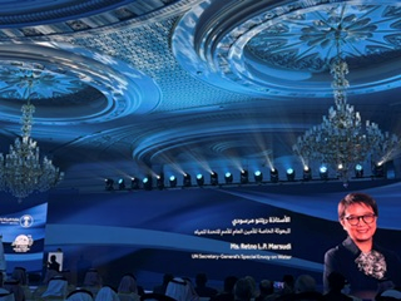
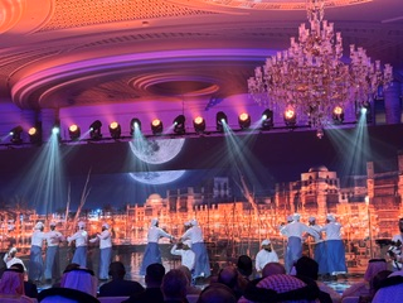
Photo: Saudi Water Week and WWF11 2SCM Opening Plenary
Following the opening ceremony, breakout sessions were convened for the Thematic, Regional, and Political Processes. Guided by the overarching theme of WWF11, “Action for a Better Tomorrow,” participants explored ways to strengthen links between Forum processes and implementation initiatives. Discussions within the Thematic Process focused on refining session structures and key messages. The Regional Process addressed regional priorities, the overall framework for regional discussions, and recommendations to the Ministerial Conference. Meanwhile, the five Political Processes, including the Ministerial Process and the Local and Regional Authorities Process, reviewed the roadmap toward the respective political dialogues and the adoption of their declaration documents.
Although international participation in 2SCM was more limited than initially anticipated due to the security situation in the Middle East, extensive preparatory work had already been undertaken. Coordinators had developed concept notes and continued refining session content through online meetings and written consultations. Coordinators and working groups also prepared draft key messages and proposed outcomes for the Political Process, particularly those intended for consideration at the Ministerial Conference. Building on this preparatory work, participants used the 2nd SCM to exchange views, refine priorities, and confirm the overall direction for developing substantive outcomes for WWF11.
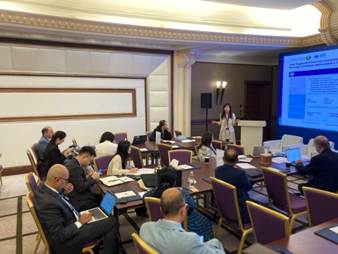
Within Thematic Process 4C, coordinated by the author, the second-day roundtable welcomed H.E. Dr. Hani Sewilam, Minister of Water Resources and Irrigation of Egypt. Participants engaged in an active exchange of views on the priorities and concrete actions to be reflected in the recommendations to the Ministerial Conference.
A key message emerging from the discussion was that the future of Integrated Water Resources Management (IWRM)lies in strengthening implementation rather than creating new frameworks. Participants agreed that the priority should be to operationalize existing IWRM frameworks through practical investments, institutional strengthening, adaptive management, and the application of lessons learned from successful experiences. At the national and river basin levels, this requires translating policies into action through governance arrangements tailored to local contexts.
Participants also emphasized that effective IWRM depends on inclusive and participatory governance that engages communities, water users, women, youth, Indigenous Peoples, and other stakeholders in shaping water policies, planning, and investment decisions.
Fortransboundary water cooperation, participants reaffirmed that international water lawprovides the foundation for collaboration among riparian countries and that existing institutional arrangements should be further strengthened rather than replaced. They further highlighted the importance of innovative governance approaches and multi-stakeholder financing mechanisms to connect local actions to national, river-basin, and transboundary implementation. Overall, participants agreed that accelerating IWRM requires moving beyond commitments toward results-oriented implementation, supported by broad partnerships, sustained investment, and innovation that complements and strengthens existing knowledge and proven practices.
Building on the outcomes of the 2nd SCM, work will now continue to further develop the Forum’s thematic outputs, regional recommendations, political messages, and session programs in preparation for the 11th World Water Forum, to be held in Riyadh in March 2027.
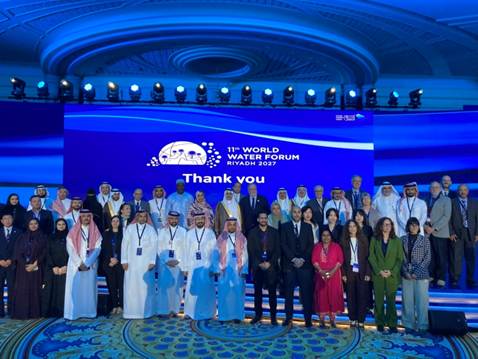
(Reporter: Yumiko Asayama, Chief Manager)