From 25 to 28 May 2026, the Fourth High-Level International Conference on the International Decade for Action “Water for Sustainable Development” (2018–2028), commonly known as the Fourth Dushanbe Water Conference, was held in Dushanbe, Tajikistan. The conference brought together governments, international organizations, research institutions, and other stakeholders to reaffirm water as a global priority and to accelerate action toward the 2026 and 2028 United Nations Water Conferences.
Asia-Pacific Regional Preparatory Meeting for the 2026 UN Water Conference
On 25 May, prior to the main conference, the Asia-Pacific Regional Preparatory Meeting for the 2026 United Nations Water Conference was convened. Organized by the Government of Tajikistan in cooperation with the United Nations Economic and Social Commission for Asia and the Pacific (UNESCAP), the meeting was held as an invitation-only side event of the Fourth Dushanbe Water Conference.
More than 100 representatives from 29 countries and 30 international and regional organizations participated in the meeting. Discussions focused on regional priorities and challenges aligned with the six Interactive Dialogues of the 2026 UN Water Conference.
As one of the co-chairs of Interactive Dialogue C: Water for Planet, Japan played a leading role in advancing discussions on disaster risk reduction and climate resilience through integrated basin-scale water cycle management and ecosystem protection and restoration across the Glacier-to-Sea Continuum. Participants also exchanged views on regional priorities and practical pathways for addressing emerging climate-related water challenges across Asia and the Pacific.
The outcomes of the regional preparatory meeting were subsequently presented at the Fourth Dushanbe Water Conference and helped advance regional perspectives in the lead-up to the 2026 UN Water Conference.
Fourth Dushanbe Water Conference
The Fourth Dushanbe Water Conference, held on 26–27 May, was organized by the Government of Tajikistan in collaboration with the United Nations Department of Economic and Social Affairs (UN DESA) and other international partners. The conference served as a key platform to review progress under the Water Action Decade and to discuss priorities for the remaining years leading up to 2028.
The conference featured opening remarks by President Emomali Rahmon of Tajikistan, statements from heads of state, ministers, and senior officials, including UN Under-Secretary-General for Economic and Social Affairs Li Junhua and UN Secretary-General’s Special Envoy for Water Retno Marsudi. Thematic sessions corresponding to the six Interactive Dialogues of the 2026 UN Water Conference provided opportunities for governments and organizations to share experiences, solutions, and emerging priorities.
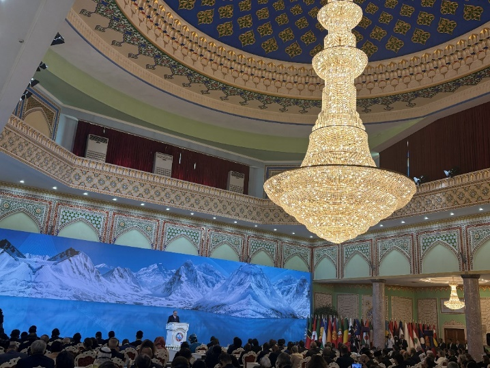
Interactive Dialogue C: Water for Planet
Co-chaired by Japan and Egypt, Interactive Dialogue C focused on addressing growing water-related risks associated with climate change, including floods, droughts, glacial lake outburst floods (GLOFs), landslides, and biodiversity loss.
Participants emphasized the need for integrated water governance, cross-sectoral cooperation, science-informed policymaking, and increased investment to strengthen resilience. Discussions also highlighted the social dimensions of water, recognizing that equitable access to and cooperation over water contribute not only to ecosystem protection but also to human security, social resilience, and peacebuilding.
The dialogue underscored the importance of strengthening climate-resilient water governance and transboundary cooperation. Participants also recognized the growing potential of artificial intelligence and digital technologies to support hydrological forecasting and decision-making, while noting that these tools complement rather than replace high-quality monitoring systems and scientific knowledge.
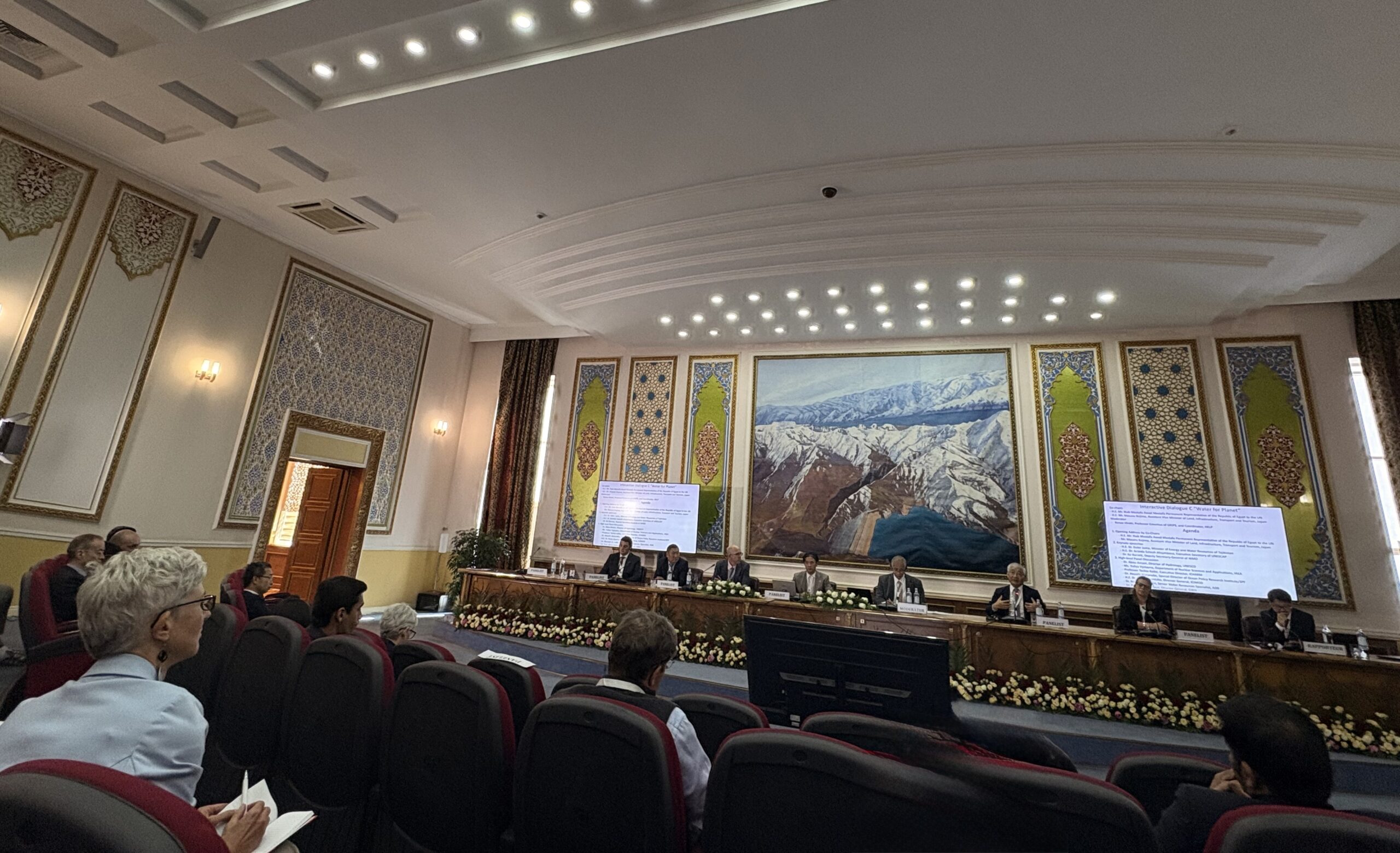
Interactive Dialogue D: Water for Cooperation
Interactive Dialogue D, co-chaired by Finland and Zambia, focused on strengthening transboundary water cooperation and enhancing basin-level governance.
Participants highlighted the importance of integrating drought preparedness, modernizing water management systems, and mainstreaming climate adaptation into national and regional planning. Strengthening collaboration among researchers, technical experts, and policymakers was identified as essential for evidence-based decision-making.
The dialogue also emphasized that transboundary groundwater management remains one of the most significant governance gaps globally and requires greater political and institutional attention. Participants further recognized the value of digital tools, including water accounting, hydrological forecasting, modeling, and integrated information systems, in enhancing transparency, cooperation, and resilience.
Adoption of the Dushanbe Declaration
A key outcome of the conference was the adoption of the Dushanbe Declaration, which calls for strengthened international action on water and outlines several priority areas:
- Prioritizing water-related actions to advance sustainable development and reduce inequalities;
- Ensuring meaningful and inclusive participation in water and sanitation decision-making;
- Translating national commitments into concrete actions at all levels;
- Closing gaps in technology, knowledge, data, and scientific cooperation to strengthen the science–policy interface; and
- Enhancing international cooperation at global, regional, and subregional levels.
The Declaration also reaffirmed the importance of sustained international engagement on water-related challenges and recommended that the co-hosts of the 2026 and 2028 UN Water Conferences submit conference outcomes and voluntary commitments to the United Nations High-level Political Forum on Sustainable Development (HLPF).
In addition, several recommendations and outcome documents were adopted to support preparations for the 2026 UN Water Conference, scheduled to take place in the United Arab Emirates in December 2026.
The Asia-Pacific Regional Preparatory Meeting and the Fourth Dushanbe Water Conference marked important milestones in the global water agenda. Both events highlighted the need for integrated approaches that connect water, climate, ecosystems, and sustainable development, while reinforcing the importance of international cooperation and concrete action toward achieving global water security.
(Reported by Yumiko Asayama, Chief Manager)